Exterior basement waterproofing in Barrie
Exterior waterproofing stops water before it saturates the foundation wall. The crew excavates to the footing, repairs the wall, applies a waterproof membrane (often with drainage board), replaces exterior weeping tile, and backfills with attention to grade. It is the more complete wall-protection approach—and usually the more disruptive and expensive one.
In Barrie, exterior work is often considered when walls stay damp despite interior management, when masonry absorbs water through mortar, when exterior weeping tile has failed, or when landscaping already needs opening. Fix gutters and grading first; many local leaks improve when roof water stops pouring into the backfill trench.
What a thorough exterior scope includes
- Excavation to the footing along the wet elevation(s)
- Wall cleaning, crack repair, and surface prep
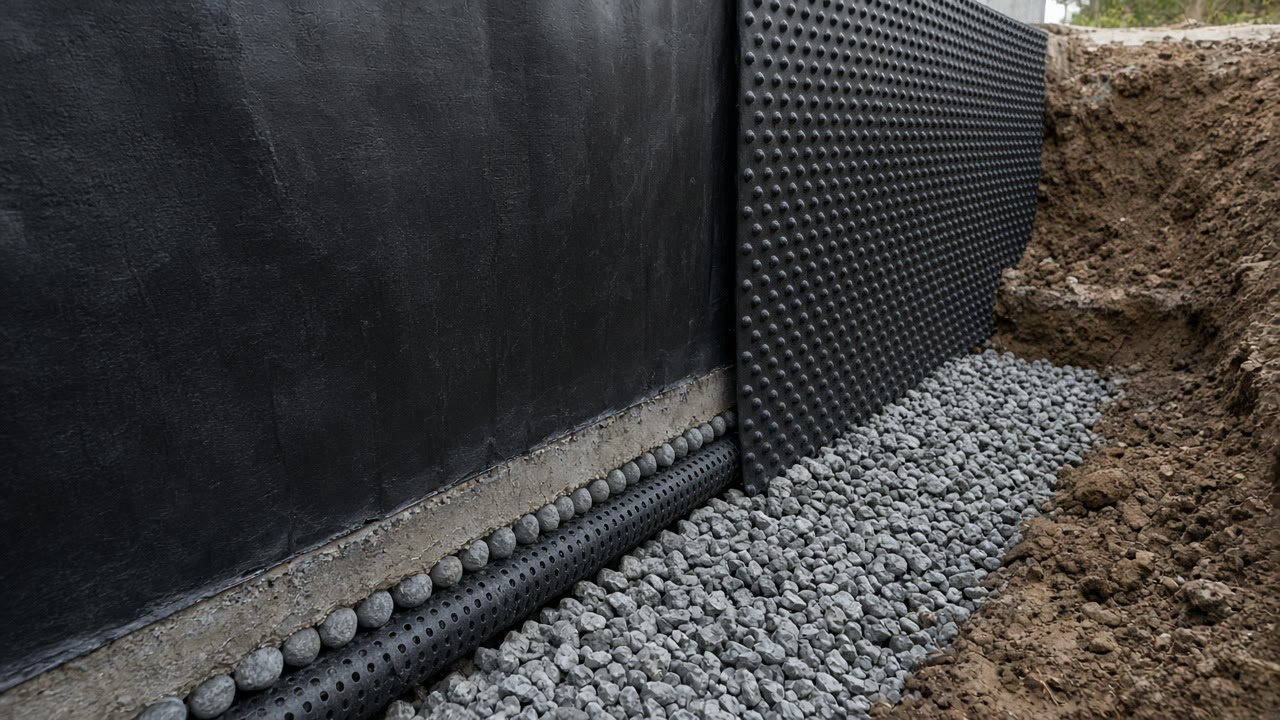
- Waterproof membrane—not just thin damp-proof paint
- Drainage / dimple board
- New weeping tile to sump or approved outlet
- Proper backfill and positive grade away from the house
Ask for materials by name. “Tar” alone is not a specification. Itemize restoration of plantings, sidewalks, stoops, AC pads, and driveway sections in the dig path.
Partial wall vs full perimeter
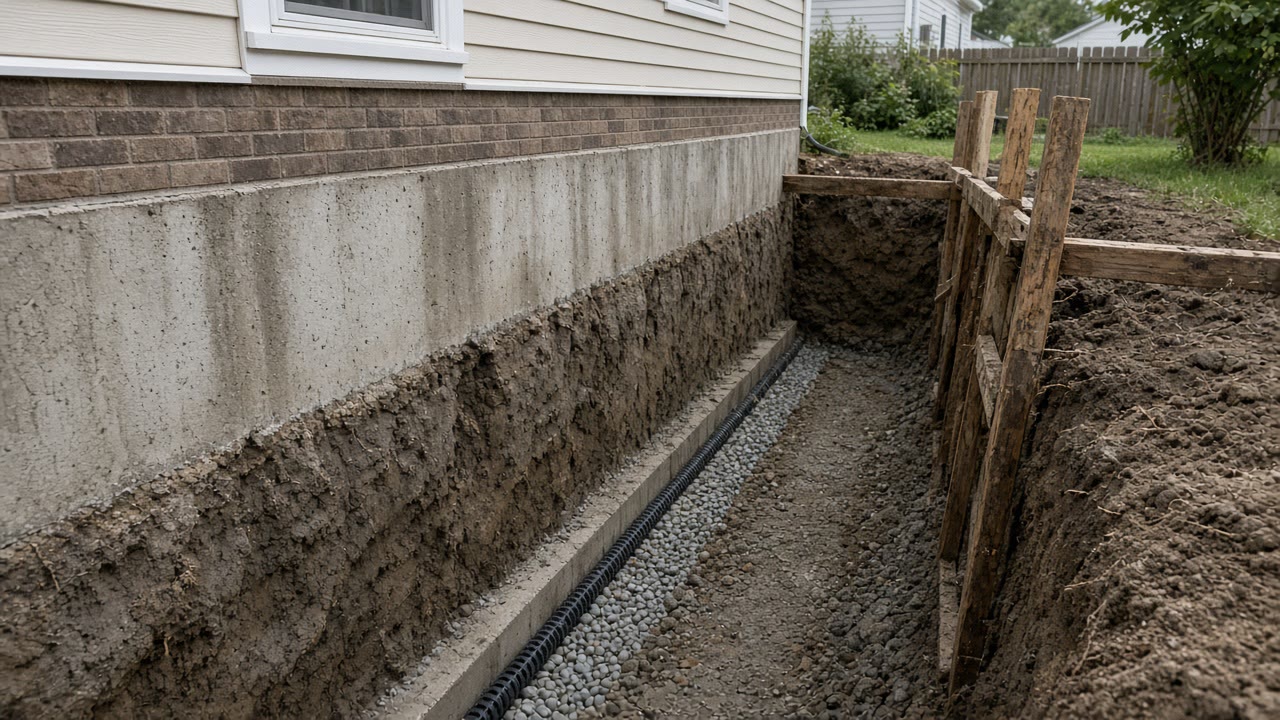
Waterproofing one wet elevation is common when diagnosis shows a single entry path—Barrie homeowners often ask about “one side of the house.” Confirm that water is not also rising under the slab; under-slab pressure may still need interior drains even after an exterior membrane on one wall.
Landscaping, driveways, and access
Full-depth digs remove plantings against the wall. Sidewalks, precast stoops, and driveway edges in the trench path often come out and go back as paid extras if not in the base quote. Tight side yards may force hand digging, which raises cost. Retaining walls next to the dig need careful assessment so excavation does not undermine them.
Cost drivers (market ranges, not our prices)
Exterior quotes rise with foundation depth, clay soils, machine vs hand-dig access, and how much landscaping, sidewalk, or driveway restoration is included. Clay soils common in southern Ontario excavate slower than sand. Ask for a written estimate for your property.
Winter work in Barrie
Membranes and coatings have minimum application temperatures. Cold-weather work may need heated enclosures and costs more. When frost is deep, many projects shift to interior methods until spring. Confirm seasonal constraints before you plan a dig against a hard deadline.
Permits and utilities
City of Barrie lists repair/replace basement waterproofing as requiring a building permit. Call Ontario One Call before any dig. Locate gas, electrical, water, and telecom lines—even for hand digging.
Exterior vs under-slab water
Exterior membranes primarily protect walls. Groundwater rising through the slab still often needs interior drainage and a sump. Complete solutions combine both when conditions demand it. See also: interior waterproofing, sump pumps, crack repair.
Before you sign
- Written diagnosis of entry path
- Linear feet and elevations included
- Membrane and drainage products named
- Weeping tile destination (sump vs storm vs other)
- Restoration inclusions and exclusions
- Warranty length, transfer rules, and what voids coverage
Why exterior work shows up in Barrie conversations
Barrie’s freeze-thaw cycles and spring melt punish damp-proofing that was never meant as true waterproofing. Some older exterior coatings crack. Weeping tile silts. Grade settles toward the house over decades. When walls stay damp, paint peels, or block shows heavy efflorescence, homeowners start weighing a dig. Exterior waterproofing is the method that puts a continuous barrier on the wet face of the wall and renews the drainage at the footing—if the lot allows the machine (or the hand dig) to get there.
It is also the method people regret skipping when they finish a basement first and then discover chronic wall moisture behind new drywall. Opening a finished basement later for interior tile is disruptive in a different way. Sequence matters: diagnose, divert surface water, then choose interior, exterior, or both before you invest in finishing.
Surface water first — still
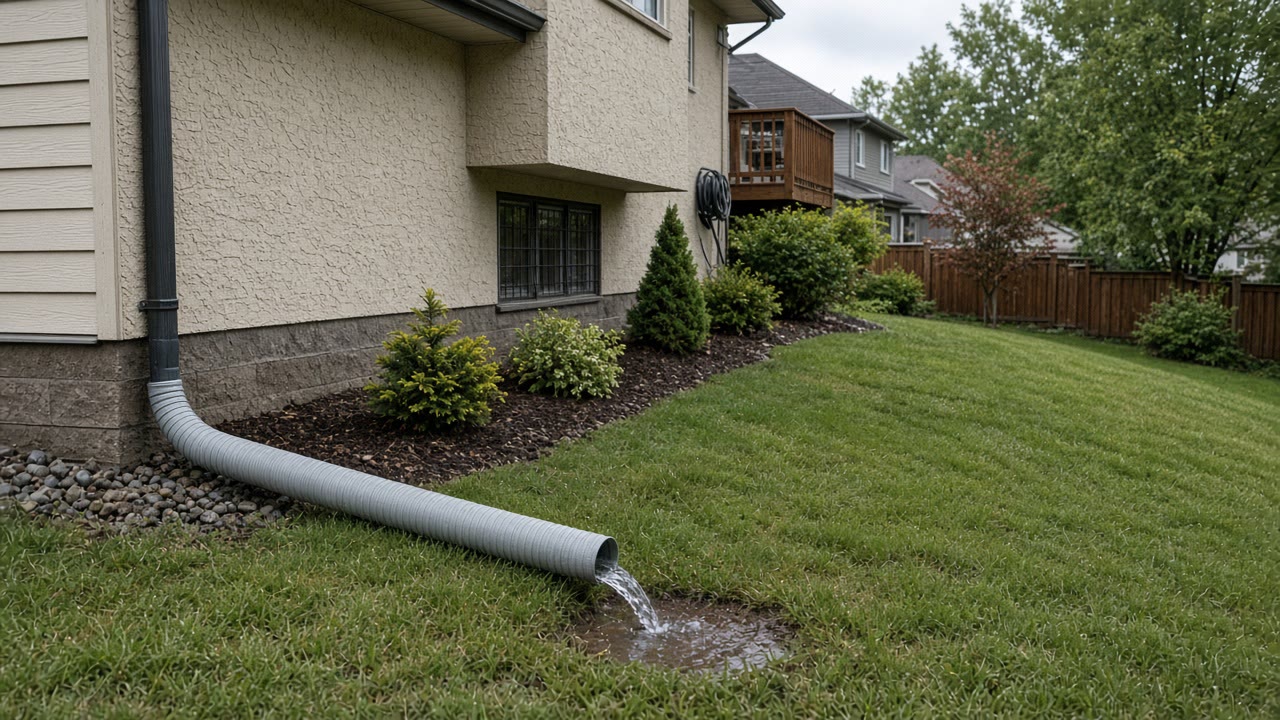
Reddit threads and local Barrie advice converge on the same cheap checks: gutters that do not overflow, downspouts extended well away from the foundation, soil that slopes away for the first metres, and window wells that drain. Exterior waterproofing is the last resort after those controls, not the first invoice. If a neighbour’s grading dumps water onto your lot, document it; civil drainage disputes are separate from foundation membranes.
Snow piled against the foundation all winter becomes a concentrated melt load. Driveway clearing that pushes snow toward the house recreates the same problem every March. Exterior membrane cannot outrun a seasonal mountain of meltwater parked on the backfill.
Hand digging, clay, and restoration sticker shock
Ontario cost guides repeatedly flag clay excavation premiums and hand-dig premiums when machines cannot fit. Barrie lots with narrow side yards, mature trees, or attached garages hit those premiums. Ask bidders to walk the access path with you and mark what must be removed. Get restoration allowances in writing—sod, shrubs, irrigation, interlock, poured walks, and fence posts all become change orders if ignored.
Partial-wall digs reduce cost when only one elevation leaks, but they require honest diagnosis. Water that travels along the footing can appear far from the entry point. A good inspection explains why the wet corner is wet—not just which wall is easiest to dig.
Combining exterior membranes with interior drains
Exterior walls can be dry while the slab still weeps under hydrostatic pressure. That is not a failure of the membrane; it is a different physics problem. Many thorough Barrie-area solutions eventually include both an exterior elevation repair and an interior sump-connected drain. Budget conversations should allow for that possibility instead of treating the methods as a loyalty contest.
Warranty questions worth asking
Ask what voids coverage: altered grading, clogged discharge, homeowner modifications, or lateral sewer issues. Ask whether the warranty covers labour and materials or materials only. Ask how claims work if the company is sold. Transferable “lifetime” language is only as strong as the paperwork—treat it as a contract term to read, not a slogan to trust blindly. This brand’s warranty terms remain hold for verification.
Permits, inspections, and Ontario One Call locates protect you as much as the membrane does. Skipping them to “save time” creates resale and insurance problems later. City of Barrie guidance is clear that basement waterproofing repair or replacement is permit territory—confirm your file before the excavator arrives.
Material choices beyond “tar the wall”
Homeowners hear “tar” used as a catch-all. Modern exterior scopes usually specify a waterproofing membrane rated for below-grade use, often paired with a dimpled drainage board that creates a vertical path for water to the weeping tile. Some systems use spray-applied membranes; others use sheet goods. What matters for your Barrie quote is that the product is named, the surface prep is described, and the drainage layer is not skipped to shave price.
Weeping tile should be new where the dig occurs, wrapped or bedded to reduce silt, and connected to a known outlet—sump, storm connection where permitted, or another engineered path. Leaving old crushed tile in place under a new membrane is a common way for “new waterproofing” to disappoint two springs later.
Backfill technique matters as much as membrane brand. Uncompacted trenches settle and recreate negative grade. Clay backfill against a fresh membrane without drainage stone can hold water against the wall. Ask how the crew will rebuild the trench and what finish grade they will leave on day one versus after settlement.
Scheduling around Barrie seasons
Ideal exterior windows are typically frost-free shoulder seasons. Mid-winter digs need thawing, heaters, and patience. Mid-summer drought can make trenches dusty but easier; afternoon storms still flood open excavations. If your leak is urgent in January, ask whether a temporary interior measure can protect the space until a proper exterior dig is feasible. Urgency and permanence are not always the same visit.
Coordinate with neighbours when shared drives or fences sit on the dig line. Ontario One Call locates protect utilities; neighbour conversations protect relationships when machines need swing room. Document pre-existing cracks in adjacent walks with photos dated before work—avoids disputes afterward.
How exterior work interacts with finishing plans
If you plan to finish the basement within a year, exterior wall dryness is a gift to future framing. Interior drains can still be wise for cove control, but starting with a wet masonry face behind new studs is how mold stories begin. Sequence: divert surface water, complete exterior elevations that need it, confirm dryness through melt, then finish. Skipping confirmation to hit a renovation deadline is how people pay twice.
Exterior waterproofing FAQs
Is exterior waterproofing worth the extra cost vs interior?
Exterior dig + membrane + footing drains stop water before it saturates the wall and can replace failed exterior weeping tile. Cost is typically higher than interior methods because of excavation and restoration. Choose when access allows and wall dryness or membrane failure is the issue.
Should I fix gutters and grading before paying for a dig?
Yes. Extend downspouts well away from the foundation and restore slope away from the house; many Barrie leaks improve after surface drainage fixes. Major excavation is the step after cheap water diversion fails.
Will exterior work ruin my landscaping / driveway / sidewalk?
Full-depth dig typically removes plantings against the wall; sidewalks, stoops, AC pads, and driveway sections in the dig path often need temporary removal and paid restoration. Get restoration inclusions and exclusions in writing.
Can you waterproof just the wet wall instead of the whole house?
Partial-wall exterior work is common when one elevation is the entry path. The inspection should confirm water is not also rising under the slab (which may still need interior drainage).
How long does exterior waterproofing take?
Simcoe competitor tables often cite typical exterior work of about 3–7 days depending on scope. Access, depth, hand-dig, and restoration add time. Ask about the next available window when you enquire.
Can exterior waterproofing be done in Barrie winter?
Membranes and coatings have minimum application temperatures; winter work may need heated enclosures and costs more. Interior methods are often scheduled when frost makes digging hard — confirm seasonally.
Do I need a Barrie permit for exterior waterproofing?
Repair/replace basement waterproofing is listed as permit-required by the City of Barrie. Digging near utilities also requires Ontario One Call locates before excavation.
Exterior vs interior when I have a retaining wall or tight side yard?
Tight gaps may force hand digging (higher cost) or make exterior unsafe for adjacent structures; interior may be the practical path.
Does exterior waterproofing stop water coming up through the floor?
Exterior wall membranes primarily protect walls; under-slab hydrostatic pressure still often needs interior drains and a sump. Many complete solutions combine both.
What products / steps should a proper exterior job include?
Typical thorough scope: excavate to footing, repair wall, waterproof membrane, drainage/dimple board, new weeping tile to sump or approved outlet, proper backfill, and grade correction. Ask for itemized materials — not just “tar.”